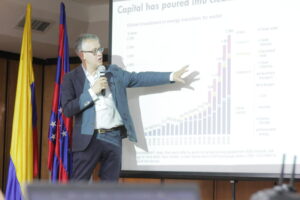
At the first international conference focused on the just transition away from fossil fuels, LINGO came to Santa Marta with a clear message: fossil fuel phase-out cannot be credible if methane is treated as an afterthought.
Methane is one of the fastest ways to slow warming this decade. Yet fossil gas too often slips through climate diplomacy under soft language, delayed timelines, and industry-friendly framing. Santa Marta was an important chance to change that.
Co-leading the science and policy space
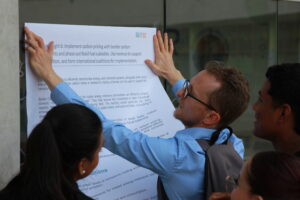
LINGO co-led the Academic Chapter / science-and-policy pre-conference for Santa Marta. This created an incubation space for researchers and policy experts to feed science-based, practical input into the high-level government summit.
The aim was simple: make the science usable, make the policy options clear, and strengthen the case for fossil fuel phase-out.
Several ideas developed or advanced during the pre-conference were later reflected in the co-chairs’ summary and are now moving forward, including:
- The Central Banks workstream,
- The Fossil Methane workstream,
- Work on Fossil Free Zones,
- Discussions around Investor-State Dispute Settlement (ISDS) reform
- Methane-related data initiatives being advanced with partner organisations.
Building the methane workstream
LINGO also built and advanced the methane workstream, including agenda-setting, participant mobilisation, virtual support, and methane-focused recommendations for governments.
Our core push was to make methane a central pillar of fossil fuel phase-out, not a side issue. That included advancing a Fossil Methane component for Phase-Out Roadmaps, linking binding methane mitigation with wider phase-out pathways.
LINGO also advanced the idea of a Fossil Methane Working Group under the Santa Marta process, helping create a pathway for this work to continue beyond the conference itself.
What comes next
Santa Marta helped open a new phase in the global conversation about fossil fuel phase-out.
More importantly, it showed that when academics, movements, think tanks, and policymakers are brought together intentionally, they can generate ideas that move quickly into official international processes.
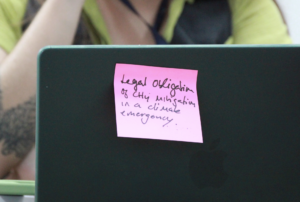
Now the task is to build on that momentum: move methane from technical discussions to binding policy, make fossil gas phase-out explicit, and keep pushing governments, investors, and civil society to treat methane as what it is: a near-term climate emergency and a core part of ending the fossil fuel era.